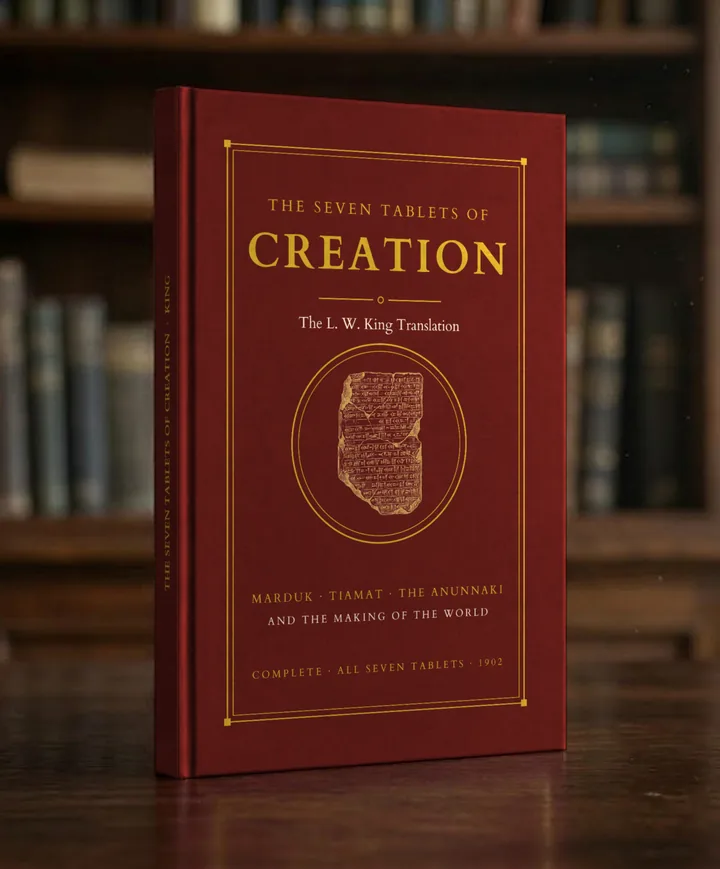
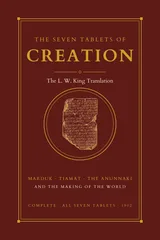
The Babylonian poem the internet calls Sumerian. Complete, all seven tablets, in L. W. King's 1902 translation — including the page where the clay breaks off, and what was found since.

One to keep, one to give. Add a second hardcover for $34.95 instead of $54.95 — you save $20.00. $89.90 for the set.
Make it a Two-Copy SetYou've probably heard that these tablets describe astronauts, or a planet called Nibiru on a long orbit past Pluto, or a race that engineered mankind. None of that is in the text. In the fifth tablet, Marduk "founded the station of Nibir" as part of setting the stars and the calendar; in the seventh, "Nibiru" turns out to be one of his fifty names — and in Babylonian astronomy, Nibiru is a name for the planet Jupiter, Marduk's own star.
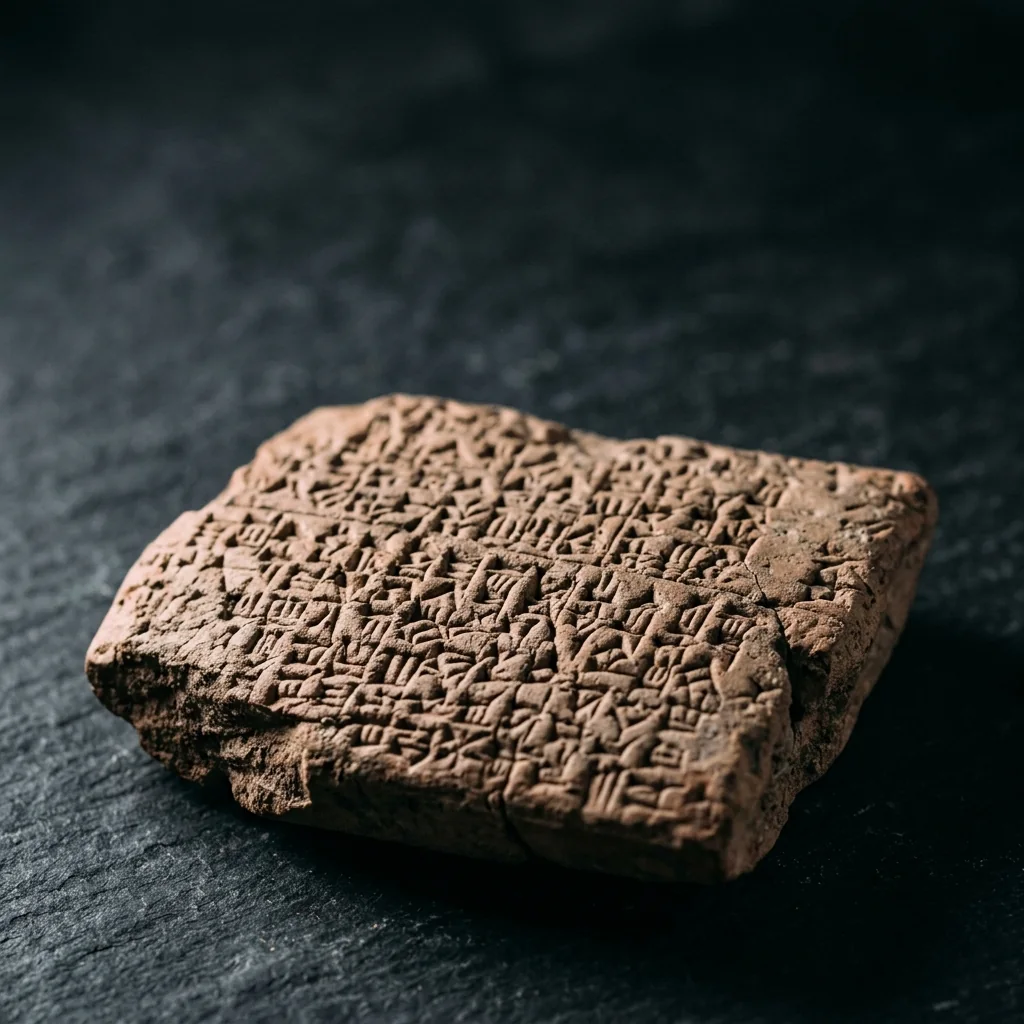
What the tablets do say is stranger than the theories, in a different way: a war between gods, a body split to make the sky and the earth, and a plan to make mankind that the clay itself interrupts mid-sentence, for over a hundred lines. Read it and judge for yourself.
What this isn't: not a Sitchin-style "ancient astronaut" book, not a new translation, not a book about extraterrestrials. It's L. W. King's 1902 translation, typeset properly, with the theories named and set aside on the page above.

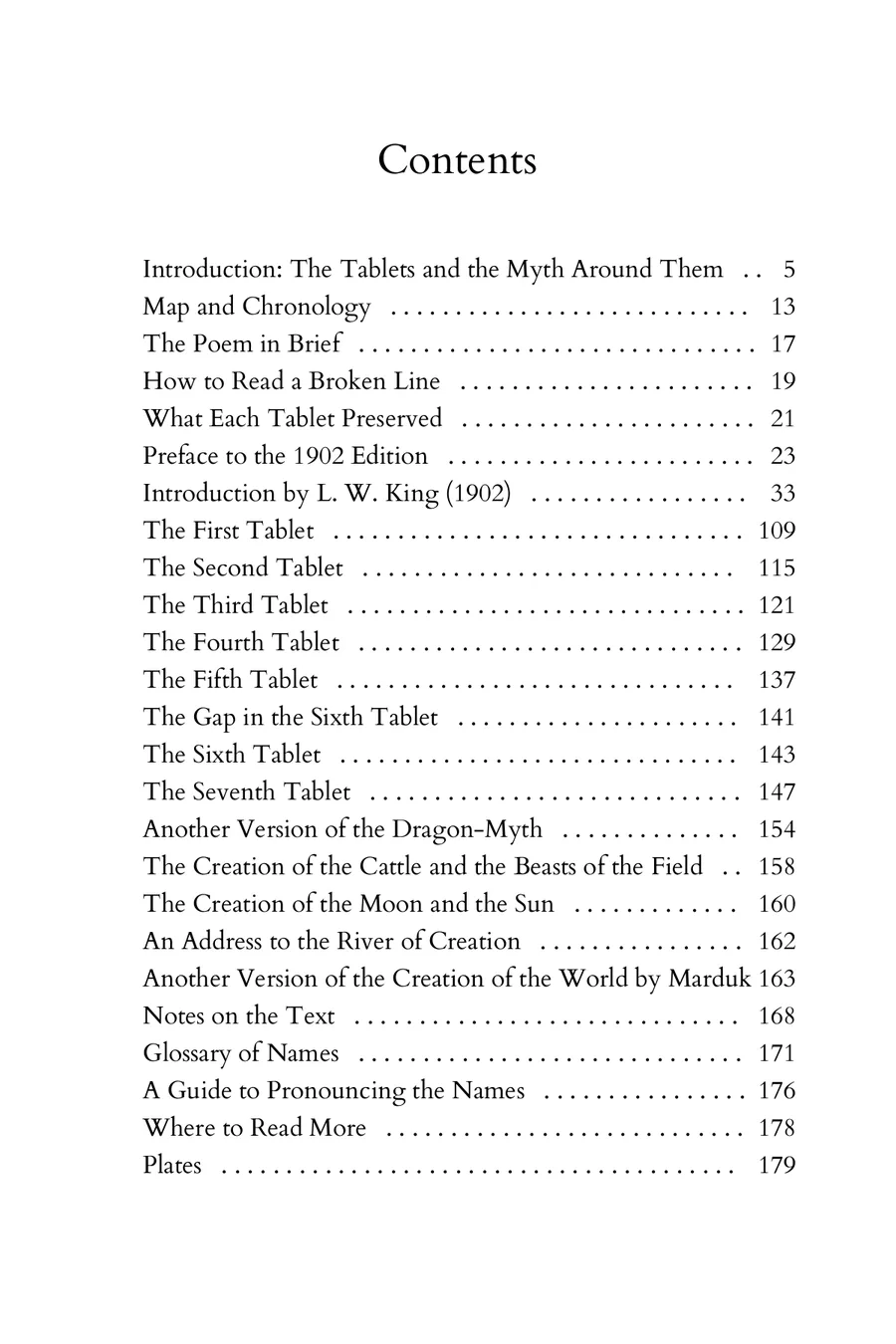
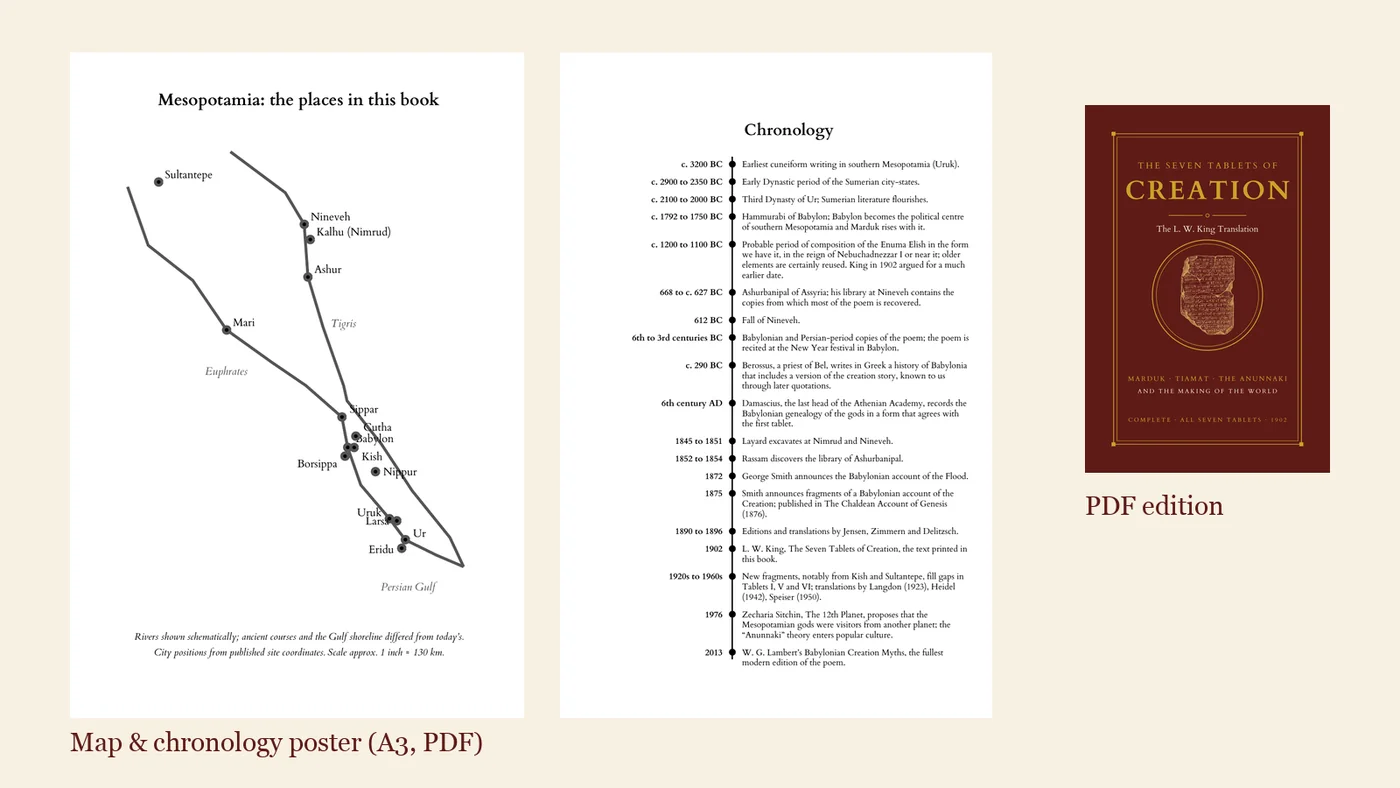
The complete 1902 introduction. All seven tablets, numbered as King numbered them, plus five related texts he grouped as "other accounts of the history of creation." Our own notes on what a century of further discovery has changed, a map, a chronology, a pronunciation guide and a glossary of names that shift from tablet to tablet.

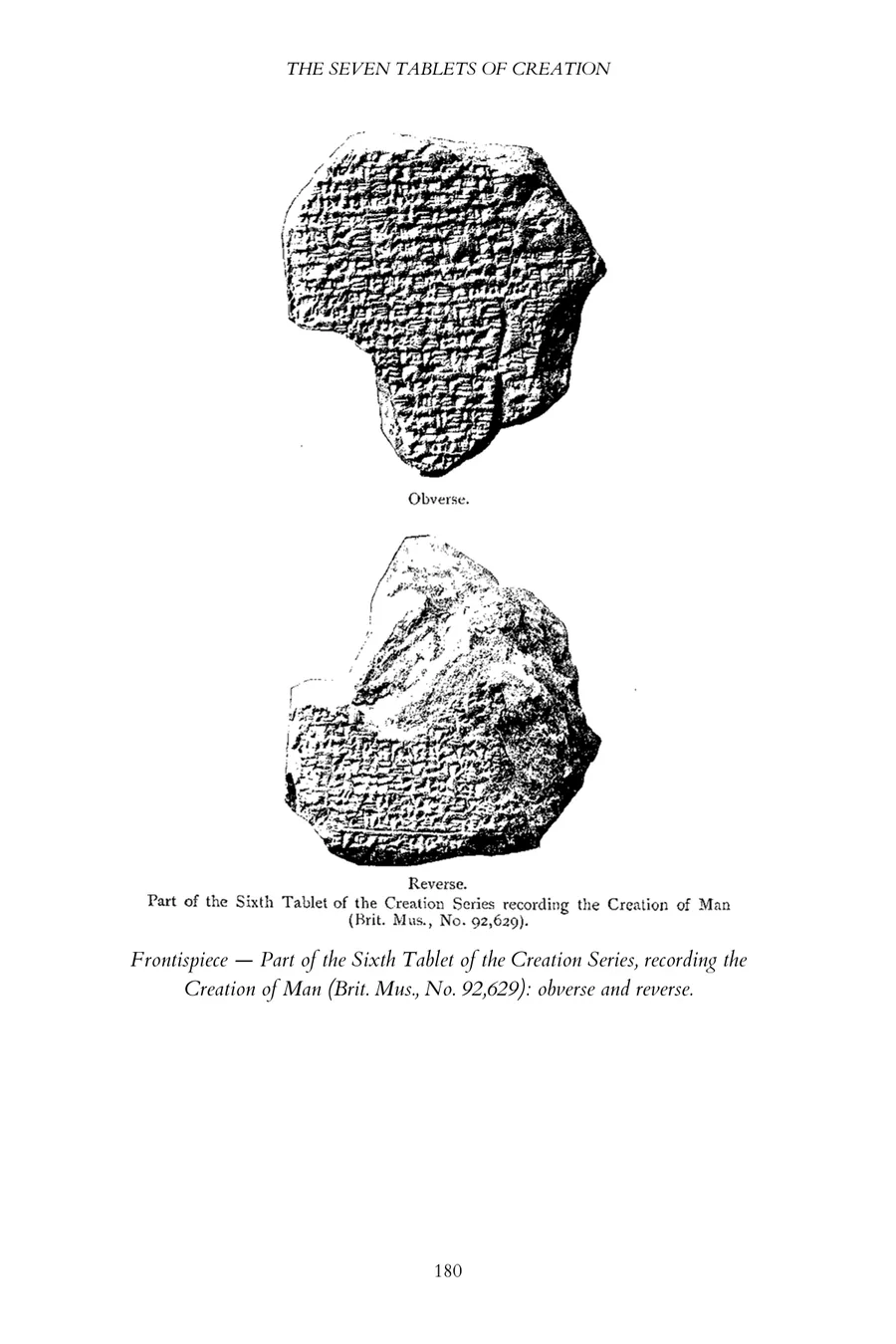
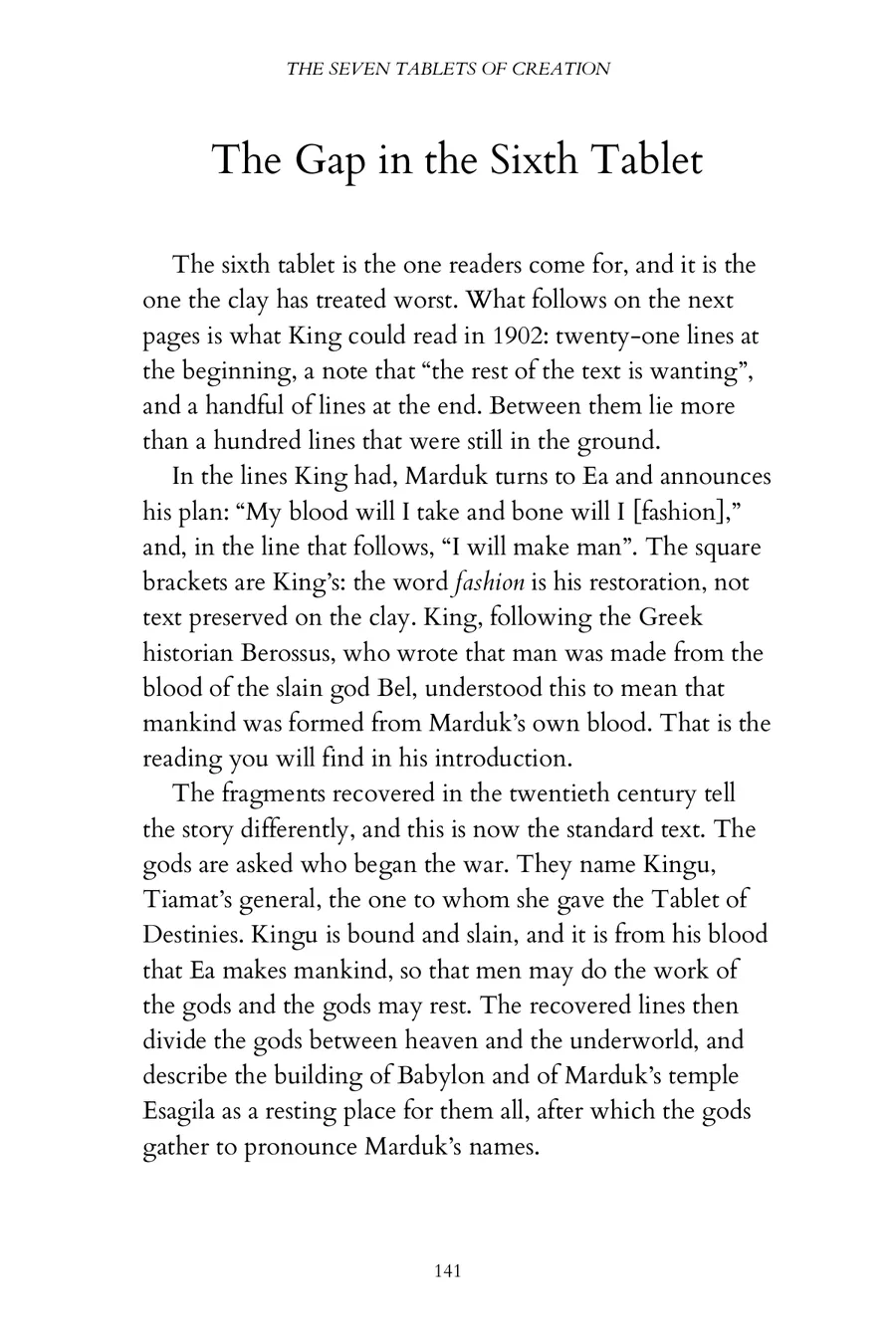
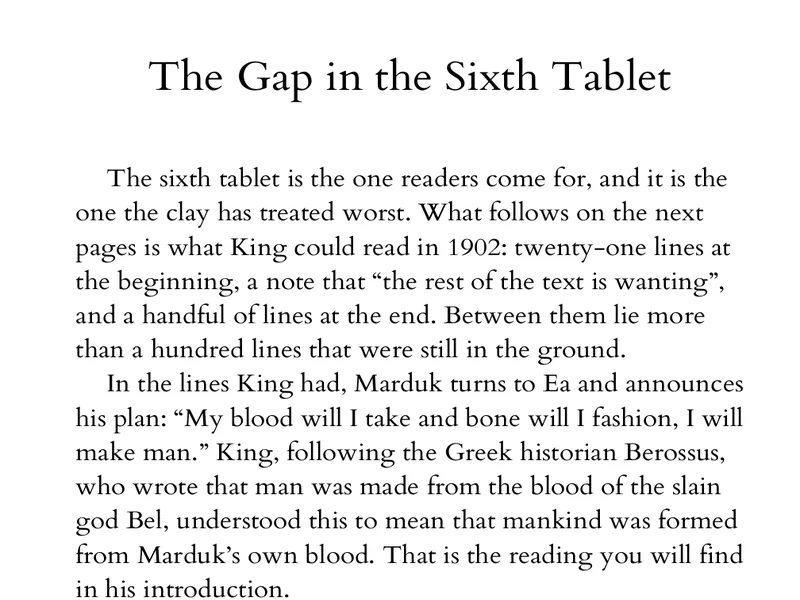
The sixth tablet is the one everyone comes for — and the one the clay treated worst. King had the opening, where Marduk proposes to make mankind "from my blood", and a handful of lines at the end. In between, over a hundred lines are marked "the rest of the text is wanting". We print King's text exactly as he had it, and add a page — free, sent to your inbox from the form below — that tells you plainly what the fragments recovered since 1902 say filled that gap, instead of quietly rewriting King's translation to smuggle it in.
Get the free chapter
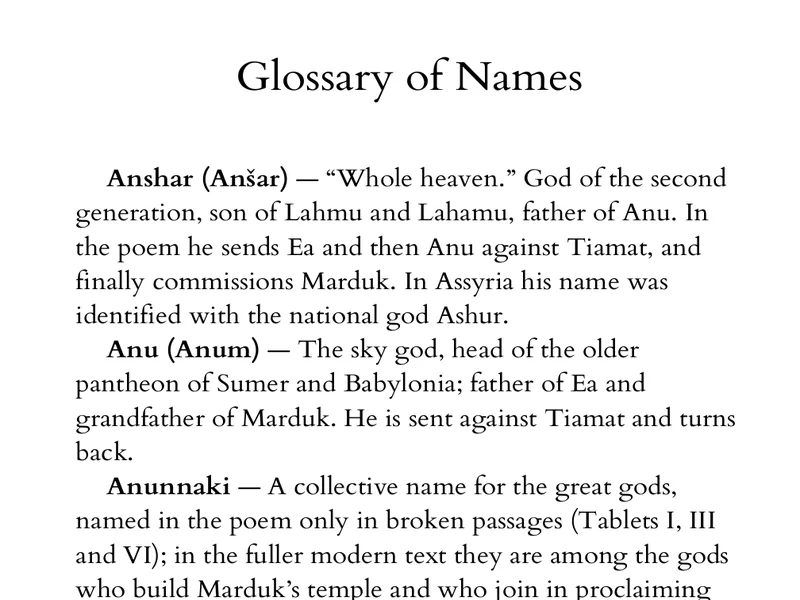
Twenty-six names, places and objects from the poem, spelled the way King spelled them (Anshar, Kishar, Tiamat, Apsû), with modern spellings noted — plus the scholars who recovered the text, from George Smith's first announcement in 1875 to King's own translation in 1902. Every entry checked line by line against King's own text, including the one that matters most: Anunnaki is a title of rank, "offspring of Anu," not a claim about where anyone came from.
| Format | 6 × 9 in casewrap hardcover |
| Pages | 186 pages, cream 60# interior paper |
| Cover | Oxford red, glossy casewrap, gold-ink frame and title (see FAQ: "Is the gold real?") |
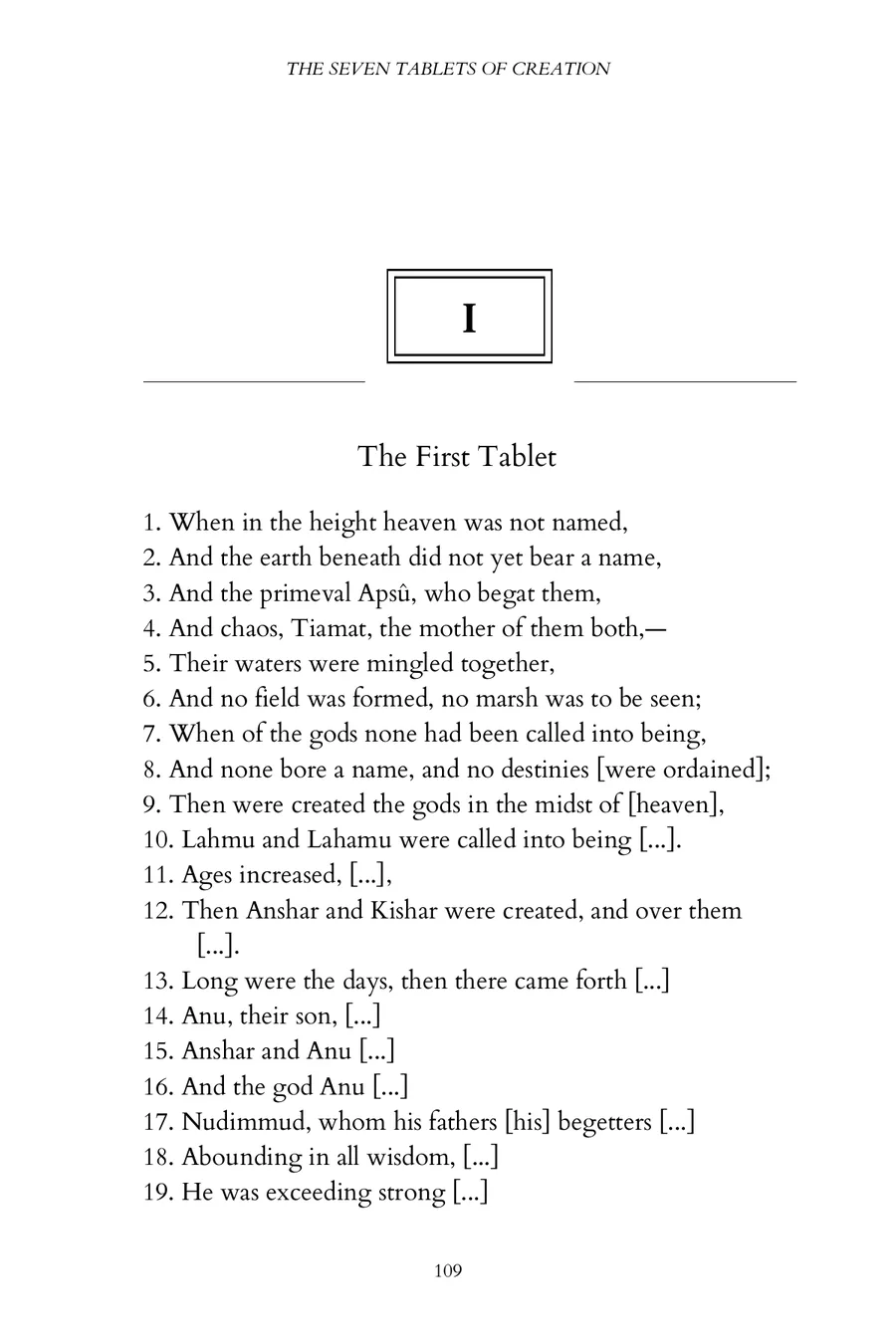
| Text | All seven tablets as King printed them in 1902, plus five related texts |
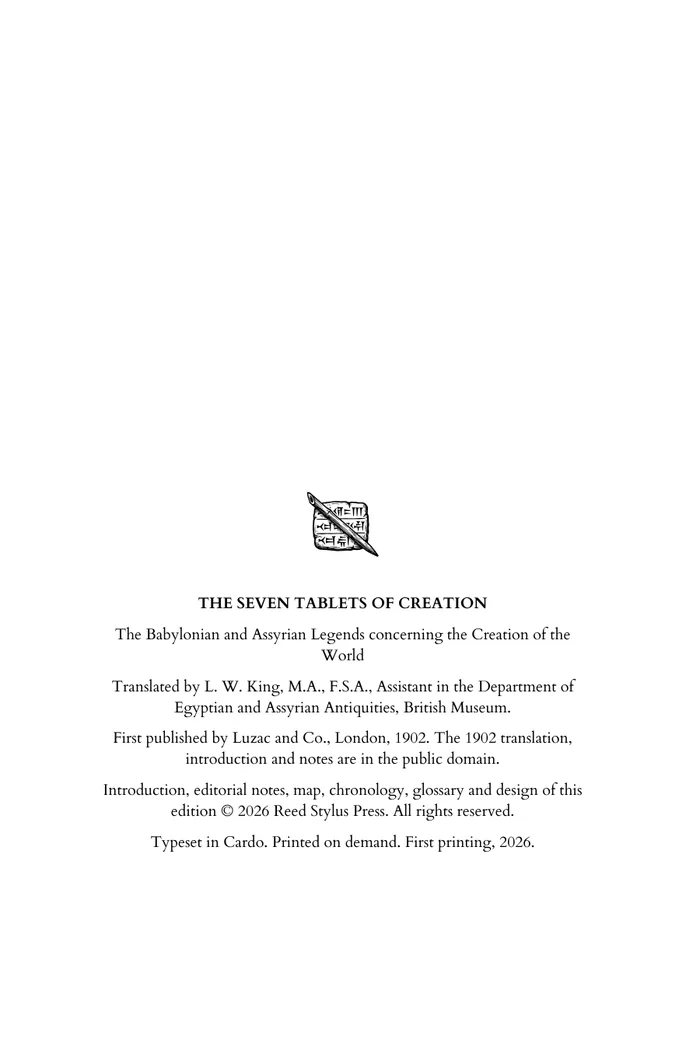
| Translation | L. W. King (British Museum, 1902), newly typeset |
| Typography | Set in Cardo |
| Extras | New introduction · map · chronology · pronunciation guide · glossary · notes on 20th-century fragments · five of the six 1902 plates |
| Made | Printed and bound to order in our print partner's network, then shipped direct to you — US: 12–15 business days, UK: 7–10 business days, both with tracking |

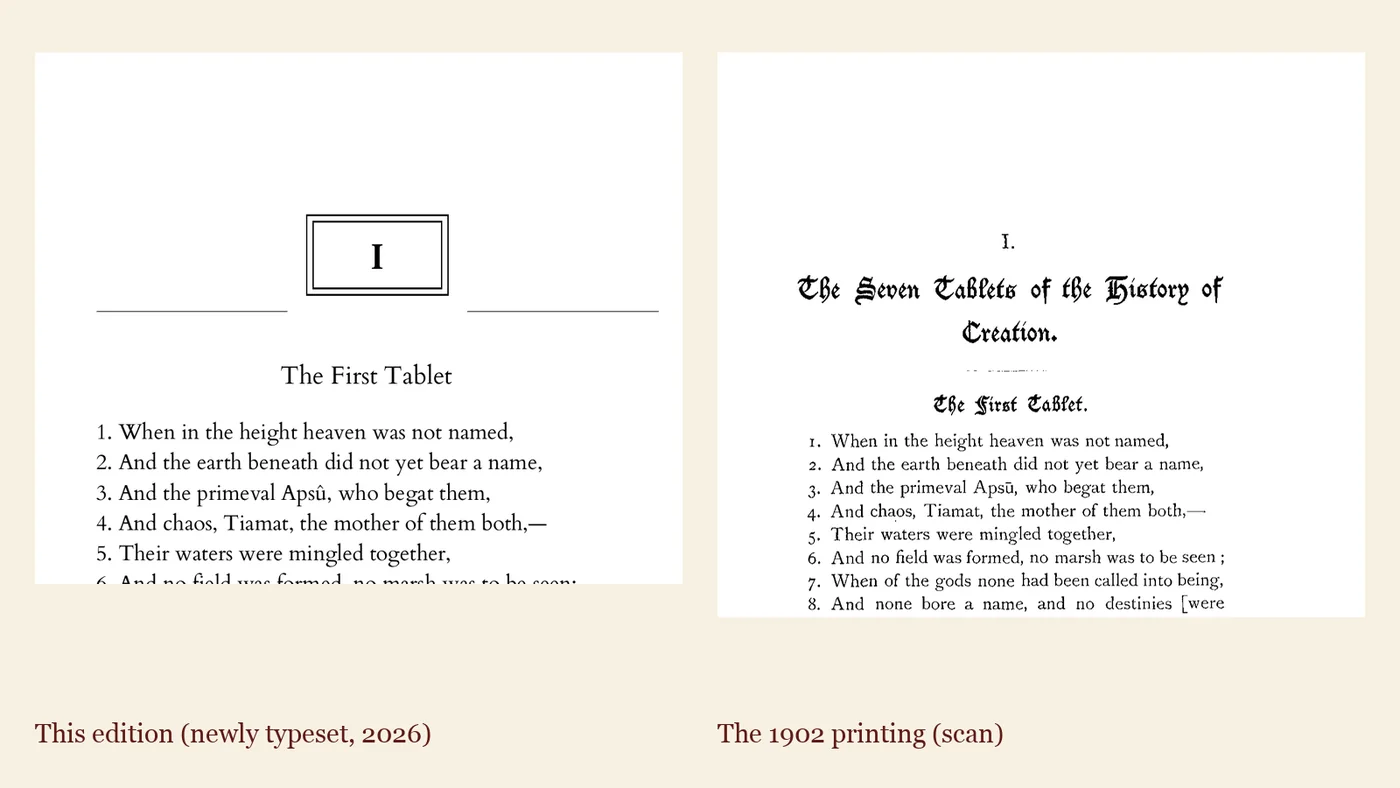
The Akkadian text and King's 1902 translation are in the public domain — you can find scans of the original on archive.org. Here's exactly what this edition adds.
| This edition | Free public-domain scan | |
|---|---|---|
| Format | Newly typeset, readable book type | Photographed 1902 pages, small serif, uneven scan quality |
| Navigation | Numbered tablets, table of contents, glossary | None |
| The gap in Tablet VI | Explained on its own page, plainly | Silent — the reader hits "[The rest of the text is wanting]" with no context |
| Glossary | 26 names defined and cross-checked | None |
| Map & chronology | Included | None |
| Format you hold | Printed hardcover | PDF or microfilm scan |
There are other cheap paperback reprints of King's translation on Amazon. We looked at three of them on the same day we wrote this page. Here's what we found, so you can decide for yourself.
| This edition | Cheap POD reprints we checked | |
|---|---|---|
| Both King volumes complete | Yes — full translation, introduction, notes | Not confirmed on any listing we checked: one edition doesn't state whether it includes both of King's original volumes; another is explicitly Volume 2 only (index and glossary, without the tablet translations) |
| Text quality | Newly typeset from the original translation | One listing states on its own product page that it's a "historical reproduction" from a digitization process, with "occasional errors" possible |
| Map & chronology | Included | Not mentioned on any listing we checked |
| Glossary | Included, 26 entries cross-checked against King's text | One listing mentions an index/glossary as part of Volume 2 only; the others don't say |
| The gap in Tablet VI, explained | Yes, on its own page | Not mentioned on any listing we checked |
| Format | Hardcover casewrap | Paperback (the editions we checked) |
| Price range seen | $54.95 | $6.90–$23.95 for the more complete-looking paperback reprint; $37–$68 for the Volume 2–only edition |
King was an Assyriologist at the British Museum, in the Department of Egyptian and Assyrian Antiquities. His two-volume Seven Tablets of Creation appeared in 1902, the first edition to present the whole poem as it then stood — every known fragment identified, with a full scholarly introduction. It's the translation this book reprints, newly typeset and checked against the original 1902 scan.
Read it. Sit with it. If it's not for you, tell us within 30 days for a full refund — no return shipping required. This book is printed just for you, so we don't ask for it back.
Arrived damaged? Email us a photo at contact@theseventablets.com and we'll reprint it free.
We went looking for a readable, honest edition of the Enuma Elish and found two options: a public-domain scan nobody had bothered to typeset, or a shelf of "ancient aliens" paperbacks that quote the tablets without printing them.
So we built the edition we wanted: King's complete 1902 translation, properly typeset, with the gaps in the clay shown rather than hidden, a glossary for the names that shift from tablet to tablet, and a plain page explaining exactly where the ancient text ends and the theories about it begin.
— Reed Stylus Press
This edition ships for the first time in September 2026. There are no reviews yet, and we won't publish one we didn't receive. Verified purchase reviews open with the first deliveries.
Yes — and that's the point. This is L. W. King's complete 1902 translation of the Enuma Elish (the Babylonian creation epic) and five related texts, all seven tablets, with King's full scholarly introduction, plus a new guide: a map, a chronology, a glossary, and notes on what a century of further discovery has changed.
No. The tablets don't describe visitors from another planet. "Anunnaki" is a title for a group of the great gods, traditionally explained as "offspring of Anu" — not a species and not a place of origin. "Nibir," in the fifth tablet, is the station Marduk founds while setting the stars and calendar; "Nibiru," one of his fifty names in the seventh tablet, is Babylonian astronomy's name for the planet Jupiter, Marduk's own star. Same name, two tablets, not a planet beyond Pluto.
The Akkadian text and King's 1902 translation are public domain, yes — you can find scans on archive.org. What you're paying for is what we add: a newly typeset, readable hardcover edition; a map and chronology; a glossary of 26 names that shift across the seven tablets; notes on what's changed since 1902; five of the six plates from the original edition; and a printed book you can hold, not a photocopy of century-old footnotes.
This book is printed and bound to order, not stocked in a warehouse, so every copy is new and it takes a little longer than a shelf book. Allow 12–15 business days from order to delivery in the US, or 7–10 business days in the UK — both with tracking sent to your email once it ships. We currently ship to the US and UK only.
See the 30-Day No-Risk Guarantee above. Full refund within 30 days, no return shipping required.
Neither. It's a primary historical document — a poem Babylonian scribes copied onto clay, in the form we have it, probably around 1200–1100 BC. You don't need any background: the introduction explains who's who, the notes explain the gaps, and the glossary catches anything that shifts.
No. The frame and title are printed in gold ink tones on a glossy casewrap, not foil. We'd rather say it than let you find out.
Complete, in L. W. King's 1902 translation, in a hardcover edition built to be read, not scanned. $54.95, with tracked shipping to the US and UK and a 30-day money-back guarantee. Printed and bound to order.

One to keep, one to give. Add a second hardcover for $34.95 instead of $54.95 — you save $20.00. $89.90 for the set.
Make it a Two-Copy SetGet "The Gap in the Sixth Tablet" — the free chapter that tells you plainly what King had in 1902, what the clay had lost, and what later fragments recovered — straight to your inbox.
One email with the chapter. No newsletter. By requesting it you agree to our Privacy policy.